Infrastructure Pricing Volatility
Stop Infrastructure Inflation from Driving Up Your Disaster Recovery Costs
The Cost of
Disaster Recovery Is Changing
AI demand, supply constraints, and rising memory and storage prices are making disaster recovery infrastructure significantly more expensive to own and operate. Most DR budgets were built before this cycle began.
Demand for high-bandwidth memory has pulled DDR5 and enterprise flash supply away from traditional server and storage buyers, and Gartner projects the resulting price surge will continue through 2028.
Instead of absorbing unpredictable capital expenses, many organizations are choosing to move to a shared disaster recovery model to reduce costs, eliminate procurement risk, and gain proven recoverability. This is where we can help.
Recovery Point’s shared recovery model pools DDR5 and flash procurement, existing vendor contracts, and facility costs across many clients, so your DR spend becomes predictable again, instead of tracking the market.
Let’s Talk
"*" indicates required fieldsBackup Validation - Contact Form - PMAX Ads
-
TCO Savings Benchmarks for IBM Power
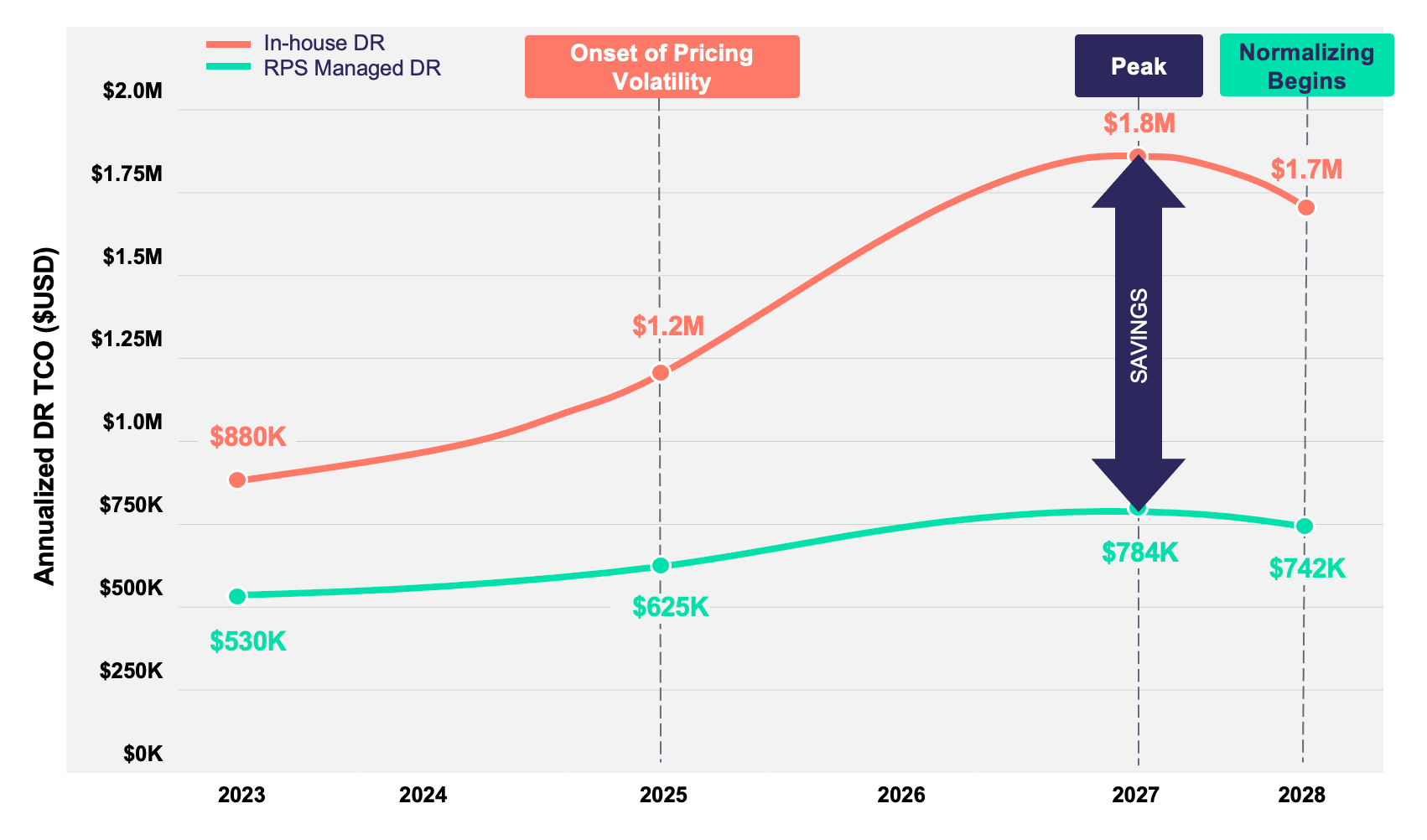
IBM Power, as an illustrative model of a managed DR model vs. an in-house secondary DR site, shows a peak annual savings of up to $1.1m for a client scenario with IBM Power11/10 · 1,000+ Employees · $500M+ Revenue.
IN-HOUSE PEAK ~$1.8M/yr: a $900K+ increase over the 2023 baseline, absorbing the full impact of DDR5 price surges and hardware lead-time premiums.
SHARED MODEL PEAK ~$784K/yr: less than half the in-house cost through pooled DDR5 procurement, existing contracts, and shared facility costs.
PEAK ANNUAL SAVINGS ~$880K–$1.1M: The dollar gap widens at peak pricing. Even as supply normalizes in 2028, structural cost advantages of the shared model persist.
Why Acting Now Matters
-
Costs Are Still Rising
Hardware vendors have already announced multiple price increases in 2026, including memory modules up 2–3× versus 2024 levels. For each quarter of delay, in-house DR costs rise further.
-
Lead Times Are Extending
Hardware procurement timelines have stretched significantly. Organizations that delay securing new DR capacity may find themselves facing cost and availability challenges.
-
A Demand Surge is Coming
As organizations delay refresh cycles to “sweat assets,” a compressed wave of hardware demand is projected for 2028+. Prices and availability will likely worsen before they improve, making now the right moment to act.
Stats
Backups and dedicated hardware are no longer a guaranteed way to control DR costs. These figures are why locking in a shared model now matters.
-
234 %
Memory & Storage Price Surge
-
80 %
Recommended Budget Increase for CIOs
-
60 %
Estimated Savings Using a Shared Model

The Recovery Point Solution
Hot Site & Shared Infrastructure
Enterprise-grade IBM z Mainframe, IBM Power, and x86 DR environments shared across clients. Hardware costs are pooled, not owned. You get tested, ready recovery capacity without carrying the full CapEx burden on your balance sheet.
Disaster Recovery as a Service (DRaaS)
Fully managed DR with defined RTOs and RPOs, automated failover, and 24/7 monitoring. Recovery Point manages the technology, the testing, and the recovery execution so that your team doesn’t have to.
Cloud Recovery (AWS & Azure)
For workloads suited to cloud failover, Recovery Point provides managed cloud DR to AWS and Azure, eliminating on-premises hardware exposure entirely while maintaining enterprise-class recovery standards.
Managed Resiliency & Consulting
Not sure where to start? Recovery Point’s advisory team can assess your current DR posture against today’s hardware cost reality, identify where you’re over-invested in dedicated infrastructure, and chart a path to a more cost-effective model.

Key Benefits
The same shared infrastructure that keeps your recovery environment tested and ready also keeps it out of the spot market.
-

Eliminate Hardware CapEx Risk
No procurement exposure, no balance-sheet hardware, no price volatility on your books.
-
Predictable OpEx Model
Managed service fees replace unpredictable hardware refresh and escalating maintenance.
-
Tested & Certified Recovery
Regular recovery testing with documented RTOs and RPOs, difficult for most in-house DR.
-
Multi-Platform Coverage
IBM z Mainframe, IBM Power (IBMi, AIX), and x86 — all supported on a single managed platform.
-
Accelerate Decision Timeline
Market urgency is real. Recovery Point can shorten sales cycles so you're protected sooner
-
Gartner-Aligned Strategy
Shared infrastructure and cloud DR align directly with Gartner's CIO recommendations.
Trending Topics
-
 Blog
BlogInfrastructure Volatility Is Rewriting the Economics of Disaster Recovery
Learn why rising ownership costs are forcing organizations to rethink dedicated disaster recovery infrastructure—and how shared recovery models can deliver more predictable costs, lower total cost of ownership, and proven recoverability.