
Gartner: Tips to Bolster Your Disaster Recovery Program
Modernize Your DR Strategy
Your DR plan looks great on paper. Would it actually work on the worst day?
Disaster recovery has evolved beyond maintaining a recovery plan. Today’s organizations need a resilient, continuously improving disaster recovery program that aligns with business priorities, supports operational readiness, and helps ensure recovery objectives can be achieved when they’re needed most.
A new Gartner research report unpacks why so many disaster recovery programs collapse into a “DR theater” that is technically compliant, but practically unusable. The report lays out 18 concrete moves to close the gap between documentation and real recovery capability.
Download Report
"*" indicates required fieldsGartner Tips to Bolster Your DR Program
Why It Matters
Gartner's research points to a pattern seen across countless organizations: DR gets treated as a document to file away rather than a capability to maintain. The result is a plan that satisfies a checkbox but falls apart the moment it's actually needed.
-

One document, too many jobs
Bundling governance, strategy, and command-line detail into a single monolithic plan makes it unreadable in a crisis and painful to keep current.
-
Built for IT capability, not business need
Recovery priorities anchored to what systems can technically do, instead of what the business actually requires, quietly misallocate recovery investment.
-
Exercises treated as pass/fail
Without a culture of continuous improvement, testing becomes a compliance ritual instead of the thing that actually reveals whether recovery targets are realistic.
-
 INISDE THE REPORT
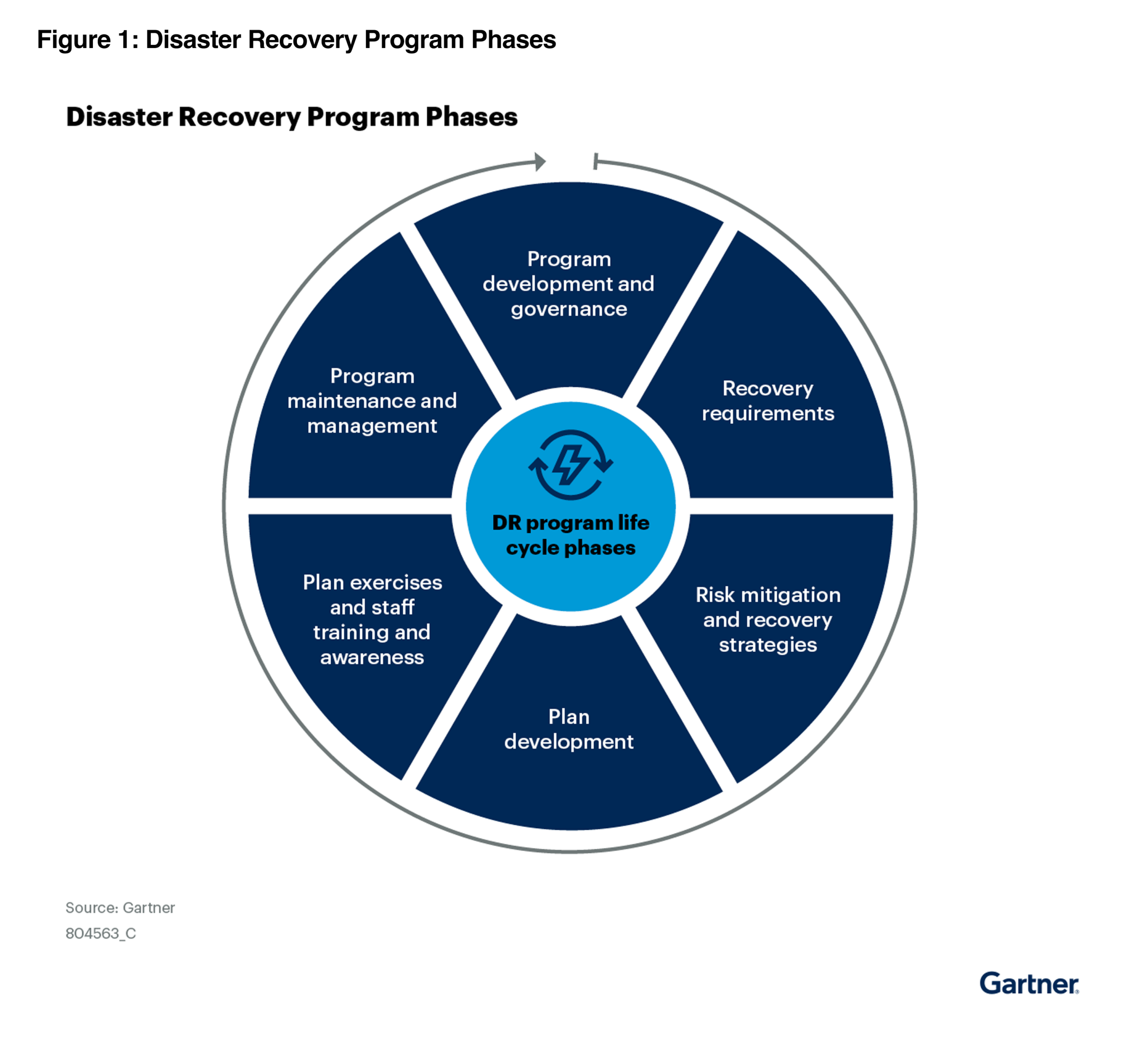
A 6-phase framework for building a program that holds up
Rather than another static template, Gartner frames DR as a continuous lifecycle — from governance and requirements through strategy, plan structure, exercises, and ongoing maintenance.
Trending Topics
-
 Blog
BlogInfrastructure Volatility Is Rewriting the Economics of Disaster Recovery
Learn why rising ownership costs are forcing organizations to rethink dedicated disaster recovery infrastructure—and how shared recovery models can deliver more predictable costs, lower total cost of ownership, and proven recoverability.